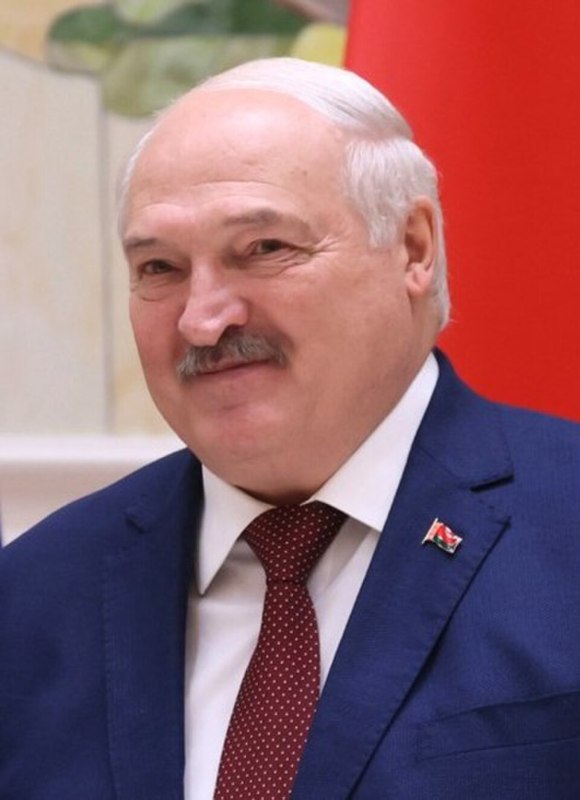
Alexander Lukashenko at a glance
How long has Lukashenko been in power?
Alexander Lukashenko won Belarus's first post-Soviet presidential election in 1994 and has never left office since, extending his rule through referendums that abolished term limits.
His 2020 re-election, widely viewed as fraudulent, triggered the largest protests in Belarusian history, which were suppressed with mass arrests and violence.
Alexander Lukashenko's political timeline
Lukashenko wins Belarus's first presidential election after independence.
A disputed referendum extends Lukashenko's term and grants him sweeping new powers.
A referendum removes presidential term limits, allowing indefinite re-election.
Lukashenko claims a sixth term amid widespread allegations of fraud, sparking mass protests.
Security forces detain tens of thousands of demonstrators; opposition leaders are jailed or exiled.
Belarus allows Russian forces to use its territory to invade Ukraine.
How did Alexander Lukashenko come to power?
A former state farm director and parliamentarian, Lukashenko won Belarus's first competitive presidential election in 1994 on an anti-corruption platform.
He rapidly moved to consolidate power, using a 1996 referendum to extend his term and subordinate parliament to the presidency.
How has Alexander Lukashenko maintained power?
Lukashenko has maintained control through a security apparatus still referred to as the KGB, tight state control of media, and the systematic suppression of independent civil society.
Since the 2020 protests, thousands of Belarusians have been imprisoned on political charges, and the country has become heavily dependent on Russian economic and military support.
Viewed alongside other leaders Dictator Dashboard tracks in Europe, such as Viktor Orbán in Hungary and Aleksandar Vučić in Serbia, Lukashenko's reliance on concentrated executive power and restricted political competition reflects a wider regional pattern.
Key mechanisms of political control
- Abolition of presidential term limits
- KGB-style security apparatus
- Mass detention of protesters and opposition figures
- State monopoly over broadcast media
- Deepening military dependence on Russia
Alexander Lukashenko's elections
| Year | Election / event | Outcome |
|---|---|---|
| 1994 | Presidential election | Won |
| 2001 | Presidential election | Won |
| 2006 | Presidential election | Won |
| 2015 | Presidential election | Won |
| 2020 | Presidential election | Won (disputed) |
Election figures and classifications should be linked to the underlying sources used by Dictator Dashboard.
Alexander Lukashenko's Strongman Index
The Strongman Index measures the concentration and durability of political power around an individual leader. The score is based on the methodology used by Dictator Dashboard.
Is Alexander Lukashenko a dictator?
Lukashenko presides over what independent monitors consistently rank as one of Europe's most repressive political systems, with no free elections since 1994.
Dictator Dashboard uses its own inclusion methodology rather than relying on a single external classification. This distinction is important because terms such as "dictator", "autocrat" and "authoritarian leader" are used differently across political research.
Sources & methodology
Dictator Dashboard combines publicly available political, electoral and historical information. Individual claims should be supported by the relevant primary or authoritative source.