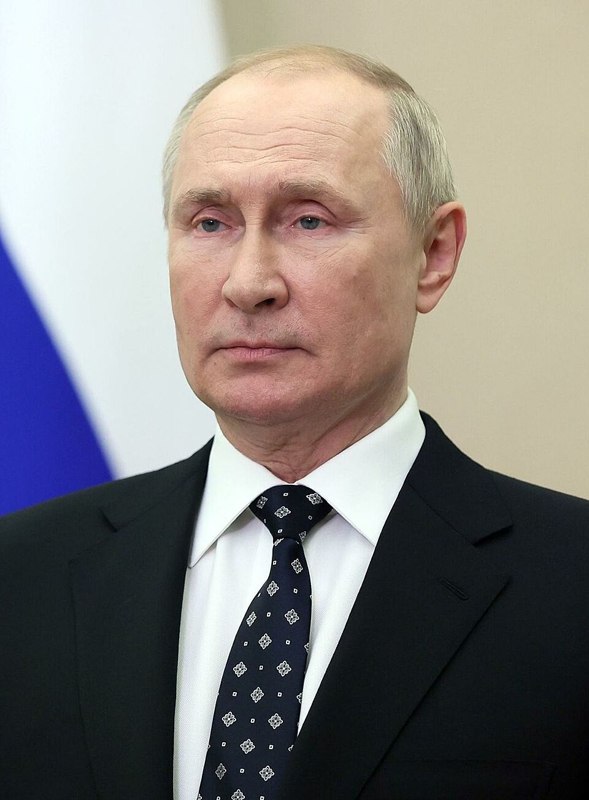
Vladimir Putin at a glance
How long has Putin been in power?
Vladimir Putin has been the dominant figure in Russian politics since becoming acting president on 31 December 1999. He subsequently served as president, then prime minister from 2008 to 2012, before returning to the presidency.
Although his formal position changed during the 2008–2012 period, Putin remained the central political figure in Russia. Constitutional changes approved in 2020 reset the calculation of presidential terms, creating a legal path for him to remain president until 2036.
Vladimir Putin's political timeline
Boris Yeltsin resigns on 31 December 1999, making Putin acting president of Russia.
Putin wins the Russian presidential election and begins his first elected term.
Putin wins a second presidential term.
Dmitry Medvedev becomes president while Putin becomes prime minister.
Putin returns to the presidency after the presidential election.
Amendments reset the calculation of presidential terms, clearing a path for Putin to remain in office beyond the previous limit.
Russia launches its invasion of Ukraine, triggering extensive Western sanctions and increased domestic restrictions on dissent.
Putin begins another six-year presidential term.
How did Vladimir Putin come to power?
Putin entered national politics through Russia's security and political establishment. After serving as director of the Federal Security Service and later as secretary of the Security Council, he was appointed prime minister by President Boris Yeltsin in August 1999.
When Yeltsin resigned on the final day of 1999, Putin became acting president. He subsequently won the presidential election in March 2000.
How has Vladimir Putin maintained power?
Putin's political system has increasingly concentrated power around the presidency and the executive branch. Over time, independent media outlets and opposition organisations have faced growing restrictions.
Opposition politicians have been imprisoned, exiled or otherwise prevented from operating freely, while constitutional and electoral changes have helped preserve the political system centred on Putin.
Viewed alongside other leaders Dictator Dashboard tracks in Europe, such as Viktor Orbán in Hungary and Aleksandar Vučić in Serbia, Putin's reliance on concentrated executive power and restricted political competition reflects a wider regional pattern.
Key mechanisms of political control
- Centralisation of executive power
- Restrictions on independent media
- Pressure on political opposition
- Changes to presidential term rules
- Control over major state institutions
Vladimir Putin's elections
| Year | Election / event | Outcome |
|---|---|---|
| 2000 | Presidential election | Won |
| 2004 | Presidential election | Won |
| 2012 | Presidential election | Won |
| 2018 | Presidential election | Won |
| 2024 | Presidential election | Won |
Election figures and classifications should be linked to the underlying sources used by Dictator Dashboard.
Vladimir Putin's Strongman Index
The Strongman Index measures the concentration and durability of political power around an individual leader. The score is based on the methodology used by Dictator Dashboard.
Is Vladimir Putin a dictator?
Putin is widely described by political scientists, governments and international organisations as an authoritarian leader. The exact terminology used to describe Russia's political system varies between researchers.
Dictator Dashboard uses its own inclusion methodology rather than relying on a single external classification. This distinction is important because terms such as "dictator", "autocrat" and "authoritarian leader" are used differently across political research.
Putin and the war in Ukraine
Russia's full-scale invasion of Ukraine began in February 2022 and fundamentally changed Putin's international position, triggering sweeping Western sanctions and a major expansion of restrictions on domestic criticism of the war.
The International Criminal Court issued an arrest warrant for Putin in March 2023 concerning the alleged unlawful deportation of Ukrainian children.
Sources & methodology
Dictator Dashboard combines publicly available political, electoral and historical information. Individual claims should be supported by the relevant primary or authoritative source.