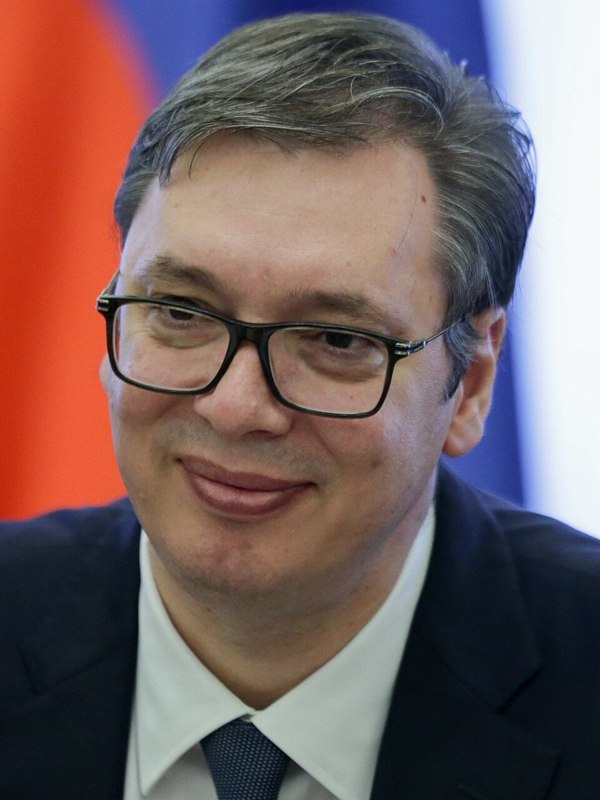
Aleksandar Vučić at a glance
Why is Vučić on the Strongman Index?
Aleksandar Vučić became Serbia's prime minister in 2014 and president in 2017, consolidating control over media and state institutions during more than a decade at the top of Serbian politics.
A deadly railway station canopy collapse in Novi Sad in late 2024 triggered a sustained protest movement accusing his government of corruption and negligence, marking the most significant sustained challenge to his rule.
Aleksandar Vučić's political timeline
Vučić takes office as Serbia's prime minister.
Vučić wins the presidency, later re-elected in 2022.
Major opposition parties boycott parliamentary elections citing an unfair media environment.
A railway station canopy collapse kills over a dozen people, sparking public outrage over corruption.
Student-led protests spread nationwide, becoming the largest sustained challenge to Vučić's rule.
Demonstrations persist into 2026 amid calls for early elections and accountability.
How did Aleksandar Vučić come to power?
Vučić rose through Serbia's Progressive Party, serving as deputy prime minister and defence minister before becoming prime minister in 2014.
He was elected president in 2017, a position from which he has continued to exert dominant influence over the ruling party and government.
How has Aleksandar Vučić maintained power?
Vučić's government has been accused by media watchdogs of pressuring and marginalising independent outlets while cultivating tabloid media loyal to the ruling party.
The 2024 Novi Sad disaster, widely blamed on corruption and lax oversight in a state infrastructure project, became a catalyst for the largest sustained protest movement of his tenure.
Compared with other leaders on the Strongman Index from Europe, such as Viktor Orbán in Hungary and Ilham Aliyev in Azerbaijan, Vučić illustrates how democratic norms can be tested without a full collapse into authoritarian rule.
Key mechanisms of political control
- Concentration of pro-government tabloid media
- Marginalisation of independent journalists
- Dominance of state institutions by the ruling party
- Opposition boycotts citing unfair electoral conditions
- Security response to sustained street protests
Aleksandar Vučić's elections
| Year | Election / event | Outcome |
|---|---|---|
| 2017 | Presidential election | Won |
| 2022 | Presidential election | Won |
Election figures and classifications should be linked to the underlying sources used by Dictator Dashboard.
Aleksandar Vučić's Strongman Index
The Strongman Index measures the concentration and durability of political power around an individual leader. The score is based on the methodology used by Dictator Dashboard.
Is Aleksandar Vučić a dictator?
Serbia retains multiparty elections and EU candidate status, but researchers have flagged democratic backsliding under Vučić, and the country's trajectory remains contested amid the ongoing protest movement.
Dictator Dashboard uses its own inclusion methodology rather than relying on a single external classification. This distinction is important because terms such as "dictator", "autocrat" and "authoritarian leader" are used differently across political research.
Sources & methodology
Dictator Dashboard combines publicly available political, electoral and historical information. Individual claims should be supported by the relevant primary or authoritative source.