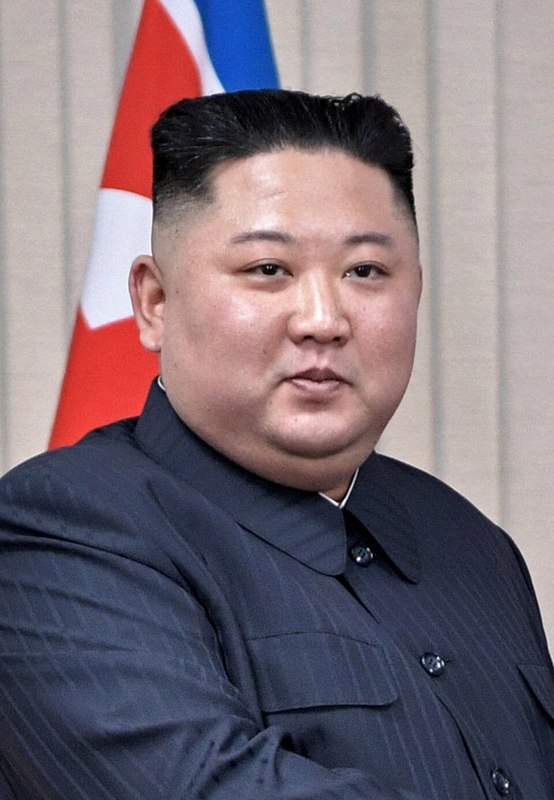
Kim Jong Un at a glance
How long has Kim Jong Un been in power?
Kim Jong Un assumed leadership of North Korea following the death of his father, Kim Jong Il, in December 2011, becoming the third member of the Kim family to rule the country since its founding in 1948.
He has since accumulated the country's top party, state and military titles, and overseen the continued development of North Korea's nuclear weapons programme despite international sanctions.
Kim Jong Un's political timeline
Kim Jong Un is given senior military and party titles, signalling his status as successor.
Kim Jong Il dies, and Kim Jong Un assumes leadership of North Korea.
Kim orders the execution of his uncle and mentor, Jang Song-thaek, in a major purge.
Kim assumes the newly restored title of party Chairman.
Kim Jong Nam, Kim's exiled half-brother, is assassinated in Malaysia.
Kim holds unprecedented summits with the leaders of South Korea, the United States and China.
North Korea passes a law declaring itself a nuclear state with an expanded first-use doctrine.
How did Kim Jong Un come to power?
Kim Jong Un was educated partly in Switzerland before returning to North Korea and being groomed for succession within the military and party apparatus from around 2009.
Following his father's death in December 2011, state media quickly proclaimed him 'Great Successor', and he moved rapidly to assume the country's top titles.
How has Kim Jong Un maintained power?
Kim maintains control through an extensive internal security apparatus, strict information controls, and a political prison camp system documented by the United Nations.
Purges of senior officials, including family members, have been used to eliminate potential rivals and reinforce loyalty within the elite.
Viewed alongside other leaders Dictator Dashboard tracks in Asia, such as Narendra Modi in India and Min Aung Hlaing in Myanmar, Kim Jong Un's reliance on concentrated executive power and restricted political competition reflects a wider regional pattern.
Key mechanisms of political control
- Hereditary, dynastic succession
- Pervasive internal surveillance and informant networks
- Political prison camp system
- Purges of rivals, including family members
- State control of all media and information
Kim Jong Un's Strongman Index
The Strongman Index measures the concentration and durability of political power around an individual leader. The score is based on the methodology used by Dictator Dashboard.
Is Kim Jong Un a dictator?
North Korea under Kim Jong Un is consistently ranked among the least free political systems in the world by independent researchers, with no meaningful political pluralism.
Dictator Dashboard uses its own inclusion methodology rather than relying on a single external classification. This distinction is important because terms such as "dictator", "autocrat" and "authoritarian leader" are used differently across political research.
Sources & methodology
Dictator Dashboard combines publicly available political, electoral and historical information. Individual claims should be supported by the relevant primary or authoritative source.