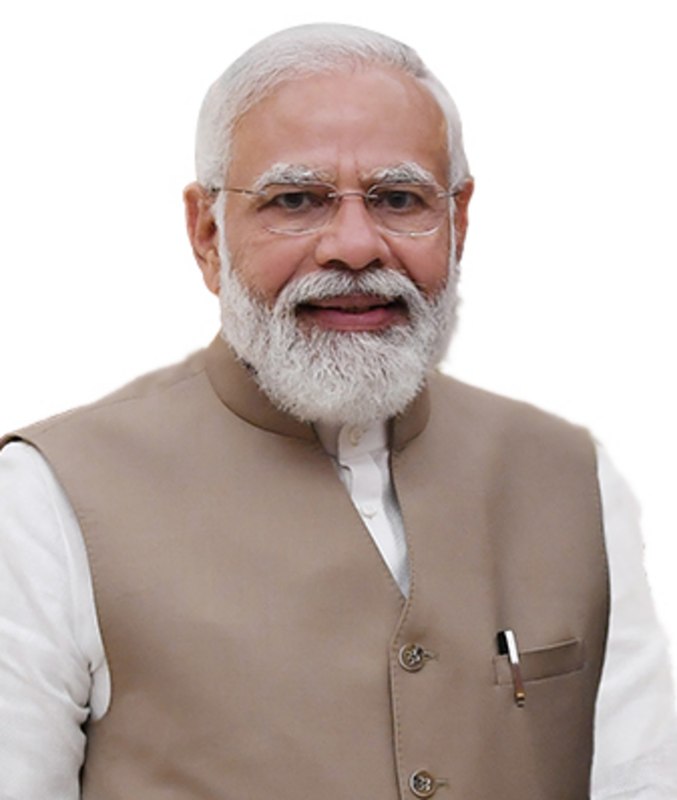
Narendra Modi at a glance
Why is Modi on the Strongman Index?
Narendra Modi became India's prime minister in 2014 and has since won two further terms, most recently in 2024, though his party's parliamentary majority narrowed and it now governs in coalition.
Press freedom organisations and rights groups have raised concerns about restrictions on journalists, the use of sedition and anti-terror laws against critics, and communal tensions involving India's religious minorities during his tenure.
Narendra Modi's political timeline
Modi becomes chief minister of Gujarat state, a post he holds until 2014.
Modi's BJP wins a parliamentary majority and he becomes prime minister.
Modi wins a second term with an expanded majority.
The government revokes Jammu and Kashmir's constitutional autonomy amid a security crackdown.
Mass protests erupt over contested agricultural and citizenship legislation.
Modi wins a third term, but the BJP loses its outright majority and governs in coalition.
How did Narendra Modi come to power?
Modi rose through the Rashtriya Swayamsevak Sangh and Bharatiya Janata Party, serving as Gujarat's chief minister from 2001 before leading the BJP to a national majority in 2014.
He has since led three successive national election campaigns, though the BJP's 2024 result required coalition partners for the first time in a decade.
How has Narendra Modi maintained power?
Press freedom and rights organisations have documented the use of sedition, anti-terror and defamation laws against journalists and critics, alongside pressure on independent and international media.
The government's 2019 revocation of Jammu and Kashmir's special constitutional status was accompanied by a prolonged communications shutdown and security crackdown in the region.
Compared with other leaders on the Strongman Index from Asia, such as Serdar Berdimuhamedov in Turkmenistan and Min Aung Hlaing in Myanmar, Modi illustrates how democratic norms can be tested without a full collapse into authoritarian rule.
Key mechanisms of political control
- Use of sedition and anti-terror laws against critics
- Pressure on independent and international media
- Revocation of Kashmir's special constitutional status
- Restrictions during periods of mass protest
- Close alignment of some state institutions with the ruling party
Narendra Modi's elections
| Year | Election / event | Outcome |
|---|---|---|
| 2014 | General election | Won |
| 2019 | General election | Won |
| 2024 | General election | Won (coalition) |
Election figures and classifications should be linked to the underlying sources used by Dictator Dashboard.
Narendra Modi's Strongman Index
The Strongman Index measures the concentration and durability of political power around an individual leader. The score is based on the methodology used by Dictator Dashboard.
Is Narendra Modi a dictator?
India remains the world's largest democracy with regular competitive elections and an independent judiciary, though press freedom rankings have declined significantly during Modi's tenure.
Dictator Dashboard uses its own inclusion methodology rather than relying on a single external classification. This distinction is important because terms such as "dictator", "autocrat" and "authoritarian leader" are used differently across political research.
Sources & methodology
Dictator Dashboard combines publicly available political, electoral and historical information. Individual claims should be supported by the relevant primary or authoritative source.