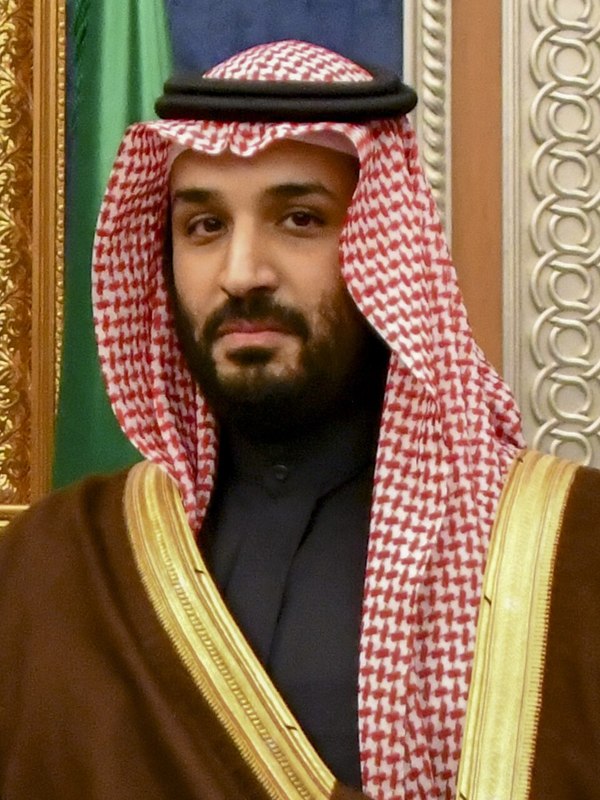
Mohammed bin Salman at a glance
How long has MBS been in power?
Mohammed bin Salman became Crown Prince in June 2017, bypassing more senior members of the royal family, and has since functioned as Saudi Arabia's de facto ruler while his elderly father, King Salman, remains head of state.
He was appointed Prime Minister in 2022, a role traditionally held by the king, formalising his day-to-day control of the government.
Mohammed bin Salman's political timeline
MBS is appointed Minister of Defence at age 29 under his father, King Salman.
MBS is elevated to Crown Prince, removing his cousin Mohammed bin Nayef from the line of succession.
Dozens of princes and businessmen are detained in an anti-corruption sweep that consolidated MBS's control.
Journalist Jamal Khashoggi is killed inside the Saudi consulate in Istanbul; US intelligence assessed MBS approved the operation.
MBS assumes the premiership, formalising his executive authority.
Saudi Arabia restores relations with Iran and expands ties with China as part of a broader foreign policy shift.
How did Mohammed bin Salman come to power?
MBS rose quickly within the Saudi government after his father became king in 2015, taking on the defence portfolio and overseeing the kingdom's intervention in Yemen's civil war.
His 2017 elevation to Crown Prince, which sidelined more senior claimants, was followed by a mass detention of rivals and businessmen that cemented his authority.
How has Mohammed bin Salman maintained power?
MBS has centralised decision-making in the royal court, curtailing the influence of the wider royal family and religious establishment that historically constrained Saudi rulers.
Human rights organisations have documented the detention of activists, clerics and dissidents, alongside tight restrictions on independent media and civil society.
Viewed alongside other leaders Dictator Dashboard tracks in the Middle East, such as Mojtaba Khamenei in Iran and Bashar al-Assad in Syria, MBS's reliance on concentrated executive power and restricted political competition reflects a wider regional pattern.
Key mechanisms of political control
- Sidelining of royal family rivals
- Control of security and intelligence services
- Detention of activists and dissidents
- Restrictions on independent media
- Centralisation of economic policy under Vision 2030
Mohammed bin Salman's Strongman Index
The Strongman Index measures the concentration and durability of political power around an individual leader. The score is based on the methodology used by Dictator Dashboard.
Is Mohammed bin Salman a dictator?
MBS presides over an absolute monarchy with no elected legislature and tightly restricted civil liberties, while pursuing an ambitious economic reform agenda.
Dictator Dashboard uses its own inclusion methodology rather than relying on a single external classification. This distinction is important because terms such as "dictator", "autocrat" and "authoritarian leader" are used differently across political research.
Sources & methodology
Dictator Dashboard combines publicly available political, electoral and historical information. Individual claims should be supported by the relevant primary or authoritative source.