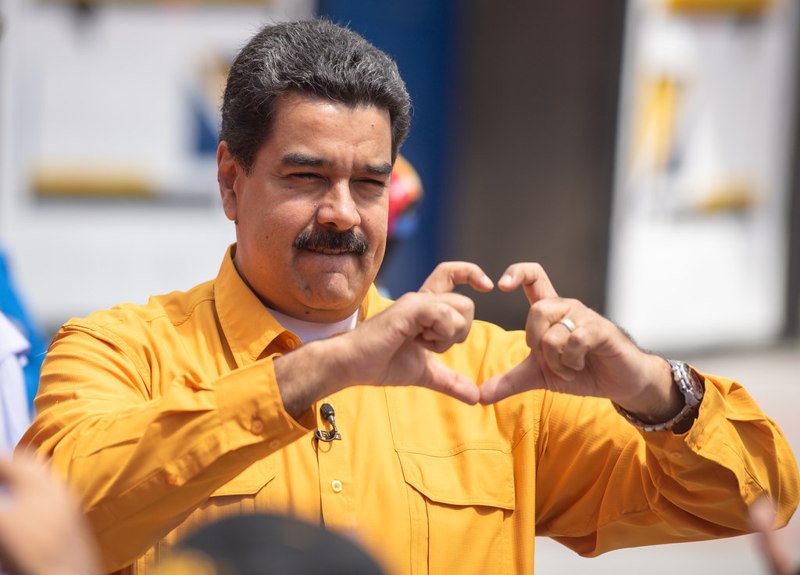
Nicolás Maduro at a glance
How did Maduro fall from power?
Nicolás Maduro became president of Venezuela in 2013 following the death of Hugo Chávez and ruled for thirteen years marked by economic collapse, mass emigration and disputed elections, until his capture by United States forces on 3 January 2026.
Following months of escalating US military pressure and strikes on alleged drug-trafficking vessels, a US operation captured Maduro and his wife at their residence in Caracas, transporting them to the USS Iwo Jima and then to New York, where he faces trial on narco-terrorism charges.
Nicolás Maduro's political timeline
Maduro is elected president following the death of Hugo Chávez.
Maduro wins a widely disputed re-election boycotted by the mainstream opposition.
Opposition leader Juan Guaidó declares himself interim president, backed by dozens of countries, without unseating Maduro.
Maduro is declared the winner of a widely disputed election; the opposition says its candidate, Edmundo González, won decisively.
Maduro is sworn in for a third term amid international non-recognition and further sanctions.
A US military operation captures Maduro and his wife in Caracas and removes them from the country.
Venezuela's Supreme Tribunal directs Vice President Delcy Rodríguez to assume presidential powers.
Maduro remains in US federal custody awaiting trial on narco-terrorism and drug-trafficking charges.
How did Nicolás Maduro come to power?
A former bus driver and union leader, Maduro rose through the Chavista movement to become foreign minister and then vice president under Hugo Chávez.
He was named interim president upon Chávez's death in March 2013 and won a narrow special election that April, beginning thirteen years in power marked by economic crisis and international isolation.
How has Nicolás Maduro maintained power?
Maduro's government maintained control through a loyal military and judiciary, restrictions on the opposition, and a widely disputed 2024 election that most independent and foreign observers concluded he lost.
US pressure escalated through 2025 with sanctions, a large naval deployment and strikes on suspected drug-trafficking vessels, culminating in the January 2026 operation that captured him directly.
Maduro's fall from power invites comparison with other cases Dictator Dashboard tracks in the Americas, including Delcy Rodríguez in Venezuela and Daniel Ortega in Nicaragua, both of whom have relied on similar tools to hold on to power.
Key mechanisms of political control
- Control of a loyal military and judiciary
- Restriction and jailing of opposition figures
- Disputed elections rejected by independent observers
- Reliance on oil revenue and allied states (Cuba, Russia, China)
- Eventual removal by direct US military action rather than internal collapse
Nicolás Maduro's Strongman Index
The Strongman Index measures the concentration and durability of political power around an individual leader. The score is based on the methodology used by Dictator Dashboard.
Is Nicolás Maduro a dictator?
Maduro's government was widely classified as authoritarian by international democracy researchers, particularly following the widely disputed 2024 election that most credible observers concluded he lost.
Dictator Dashboard uses its own inclusion methodology rather than relying on a single external classification. This distinction is important because terms such as "dictator", "autocrat" and "authoritarian leader" are used differently across political research.
Venezuela after Maduro's capture
Vice President Delcy Rodríguez assumed the presidency immediately after Maduro's capture and has since presided over a fragile transition, including the release of hundreds of political prisoners and renewed US-Venezuela diplomatic contact, while devastating June 2026 earthquakes further complicated the country's recovery.
Sources & methodology
Dictator Dashboard combines publicly available political, electoral and historical information. Individual claims should be supported by the relevant primary or authoritative source.