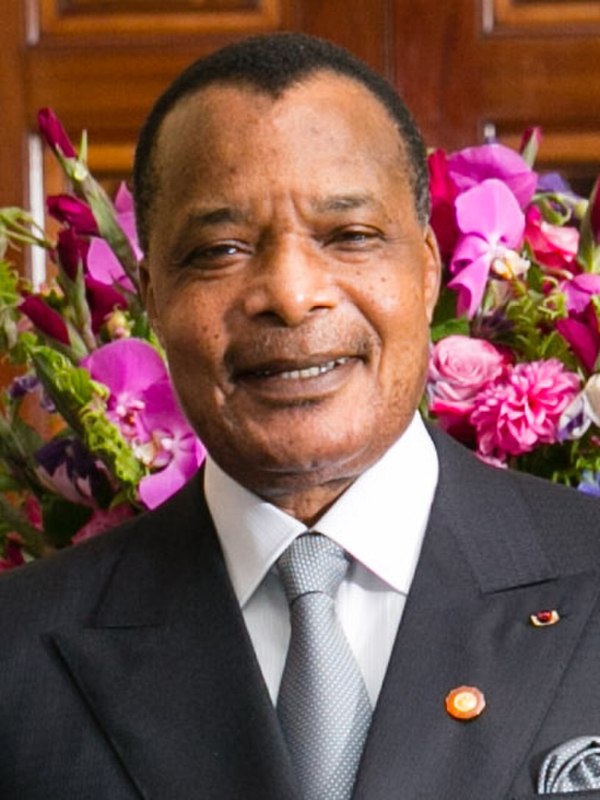
Denis Sassou Nguesso at a glance
How long has Sassou Nguesso been in power?
Sassou Nguesso first came to power in 1979 as head of the ruling party, governing until his defeat in the country's first multiparty election in 1992.
He returned to power in 1997 after a civil war, and a 2015 constitutional referendum removed both term and age limits, allowing him to continue running for re-election.
Denis Sassou Nguesso's political timeline
Sassou Nguesso takes power as head of the ruling Congolese Party of Labour.
Sassou Nguesso is defeated in the country's first democratic election.
Sassou Nguesso retakes the presidency after a civil conflict.
Sassou Nguesso is elected president under a new constitution.
A disputed referendum removes constitutional limits on his rule.
Sassou Nguesso wins another term amid opposition boycotts and restrictions.
How did Denis Sassou Nguesso come to power?
Sassou Nguesso first became president in 1979 through his position within the ruling party's military and political apparatus.
After losing power in 1992, he returned in 1997 at the head of militia forces during a civil war that devastated the capital, Brazzaville.
How has Denis Sassou Nguesso maintained power?
Sassou Nguesso has used oil revenues to sustain a patronage network among the political and military elite, while constitutional changes have removed formal limits on his rule.
Opposition figures and journalists have faced repeated restrictions, and elections have been marked by low turnout claims, boycotts and irregularities documented by international observers.
Viewed alongside other leaders Dictator Dashboard tracks in Africa, such as Yoweri Museveni in Uganda and Ismail Omar Guelleh in Djibouti, Sassou Nguesso's reliance on concentrated executive power and restricted political competition reflects a wider regional pattern.
Key mechanisms of political control
- Removal of term and age limits via referendum
- Oil-revenue-funded patronage networks
- Restrictions on opposition and independent media
- Security force loyalty tied to the ruling elite
- Family and clan-based control of key institutions
Denis Sassou Nguesso's elections
| Year | Election / event | Outcome |
|---|---|---|
| 2002 | Presidential election | Won |
| 2009 | Presidential election | Won |
| 2016 | Presidential election | Won |
| 2021 | Presidential election | Won |
Election figures and classifications should be linked to the underlying sources used by Dictator Dashboard.
Denis Sassou Nguesso's Strongman Index
The Strongman Index measures the concentration and durability of political power around an individual leader. The score is based on the methodology used by Dictator Dashboard.
Is Denis Sassou Nguesso a dictator?
Sassou Nguesso's government is regularly cited by democracy researchers as an entrenched authoritarian system with tightly restricted political competition.
Dictator Dashboard uses its own inclusion methodology rather than relying on a single external classification. This distinction is important because terms such as "dictator", "autocrat" and "authoritarian leader" are used differently across political research.
Sources & methodology
Dictator Dashboard combines publicly available political, electoral and historical information. Individual claims should be supported by the relevant primary or authoritative source.