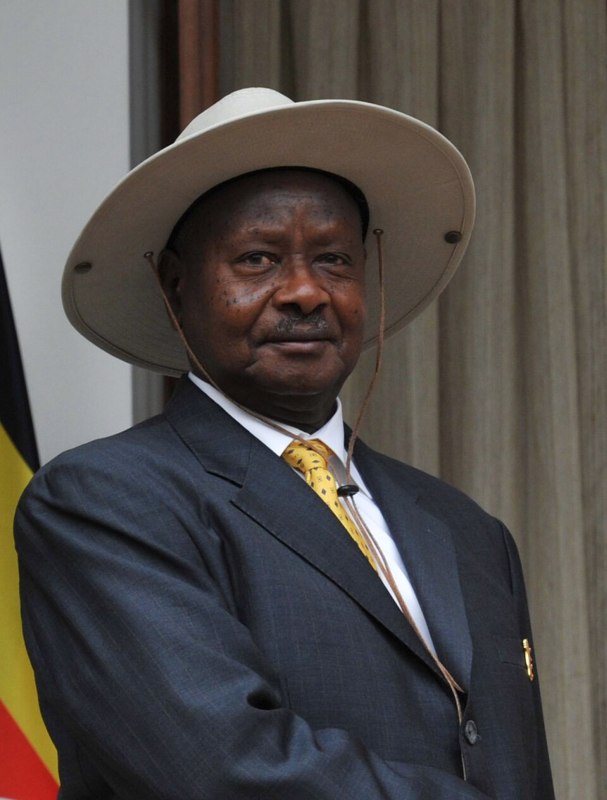
Yoweri Museveni at a glance
How long has Museveni been in power?
Yoweri Museveni took power in January 1986 after a five-year guerrilla war, becoming one of Africa's longest-serving leaders and, as of January 2026, securing a seventh consecutive term.
A 2005 referendum removed presidential term limits, and a 2017 amendment removed the presidential age cap that would otherwise have barred Museveni, now in his 80s, from running again.
Yoweri Museveni's political timeline
Museveni's National Resistance Army seizes Kampala after a five-year bush war.
Museveni wins Uganda's first direct presidential election under his rule.
A referendum abolishes presidential term limits.
Parliament removes the constitutional age cap on presidential candidates.
Museveni is re-elected amid violence and the detention of opposition candidate Bobi Wine.
Uganda votes amid an opposition crackdown and a government-ordered internet blackout.
Museveni is declared the winner with 71.65% of the vote, extending his rule to a seventh term.
How did Yoweri Museveni come to power?
Museveni led the National Resistance Army in a five-year insurgency against the Ugandan government before seizing the capital, Kampala, in January 1986.
He has remained in power ever since, winning a series of elections under a political system he has progressively reshaped in his favour.
How has Yoweri Museveni maintained power?
Museveni's government has removed both term and age limits that would otherwise have ended his eligibility to run, while opposition figures such as Robert Kyagulanyi (Bobi Wine) have faced repeated arrest and harassment.
The January 2026 election was conducted under a nationwide internet blackout and a security crackdown that Human Rights Watch and other observers documented, with the opposition rejecting the results as fraudulent.
Viewed alongside other leaders Dictator Dashboard tracks in Africa, such as Ismail Omar Guelleh in Djibouti and Paul Kagame in Rwanda, Museveni's reliance on concentrated executive power and restricted political competition reflects a wider regional pattern.
Key mechanisms of political control
- Removal of presidential term limits (2005)
- Removal of the presidential age cap (2017)
- Arrest and harassment of opposition leaders
- Internet shutdowns during elections
- Heavy security deployment around polling
Yoweri Museveni's elections
| Year | Election / event | Outcome |
|---|---|---|
| 1996 | Presidential election | Won |
| 2001 | Presidential election | Won |
| 2006 | Presidential election | Won |
| 2011 | Presidential election | Won |
| 2016 | Presidential election | Won |
| 2021 | Presidential election | Won |
| 2026 | Presidential election | Won (71.65%) |
Election figures and classifications should be linked to the underlying sources used by Dictator Dashboard.
Yoweri Museveni's Strongman Index
The Strongman Index measures the concentration and durability of political power around an individual leader. The score is based on the methodology used by Dictator Dashboard.
Is Yoweri Museveni a dictator?
Museveni's Uganda combines regular multiparty elections with an entrenched incumbency advantage, extensive security control, and the systematic removal of constitutional limits on his rule.
Dictator Dashboard uses its own inclusion methodology rather than relying on a single external classification. This distinction is important because terms such as "dictator", "autocrat" and "authoritarian leader" are used differently across political research.
Sources & methodology
Dictator Dashboard combines publicly available political, electoral and historical information. Individual claims should be supported by the relevant primary or authoritative source.