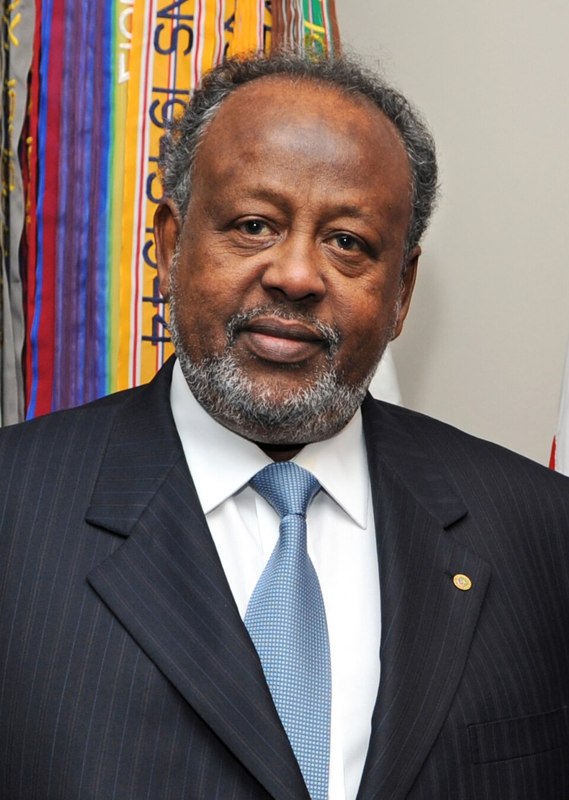
Ismail Omar Guelleh at a glance
How long has Guelleh been in power?
Ismail Omar Guelleh became president of Djibouti in 1999, succeeding his uncle and the country's founding president, Hassan Gouled Aptidon.
A 2010 constitutional amendment removed presidential term limits and an age cap, allowing Guelleh to seek further terms that he has since won by wide margins.
Ismail Omar Guelleh's political timeline
Guelleh succeeds his uncle, Hassan Gouled Aptidon, as president.
Guelleh wins a second term running without a major opposition candidate.
A constitutional amendment lifts term and age limits on the presidency.
Guelleh wins a fifth presidential term amid opposition boycotts.
Guelleh is re-elected for a further term.
How did Ismail Omar Guelleh come to power?
Guelleh served for years as chief of staff and intelligence chief under his uncle, President Hassan Gouled Aptidon, before being elected as his successor in 1999.
He has since used constitutional amendments to extend his tenure well beyond the limits originally envisioned when he took office.
How has Ismail Omar Guelleh maintained power?
Guelleh's government maintains control through a dominant ruling coalition, restrictions on opposition parties, and close management of Djibouti's strategically valuable port and military basing revenues.
Djibouti hosts military bases for the United States, France, China and others, giving Guelleh's government significant leverage and international tolerance for its domestic political controls.
Viewed alongside other leaders Dictator Dashboard tracks in Africa, such as Yoweri Museveni in Uganda and Paul Kagame in Rwanda, Ismail Omar Guelleh's reliance on concentrated executive power and restricted political competition reflects a wider regional pattern.
Key mechanisms of political control
- Removal of presidential term and age limits
- Dominance of a single ruling coalition
- Restrictions on opposition parties and media
- Control of strategic port and basing revenues
- Security force loyalty to the presidency
Ismail Omar Guelleh's elections
| Year | Election / event | Outcome |
|---|---|---|
| 1999 | Presidential election | Won |
| 2005 | Presidential election | Won |
| 2011 | Presidential election | Won |
| 2016 | Presidential election | Won |
| 2021 | Presidential election | Won |
Election figures and classifications should be linked to the underlying sources used by Dictator Dashboard.
Ismail Omar Guelleh's Strongman Index
The Strongman Index measures the concentration and durability of political power around an individual leader. The score is based on the methodology used by Dictator Dashboard.
Is Ismail Omar Guelleh a dictator?
Guelleh's Djibouti combines a formally multiparty system with a dominant ruling coalition and limited genuine space for opposition, a pattern common across the region.
Dictator Dashboard uses its own inclusion methodology rather than relying on a single external classification. This distinction is important because terms such as "dictator", "autocrat" and "authoritarian leader" are used differently across political research.
Sources & methodology
Dictator Dashboard combines publicly available political, electoral and historical information. Individual claims should be supported by the relevant primary or authoritative source.