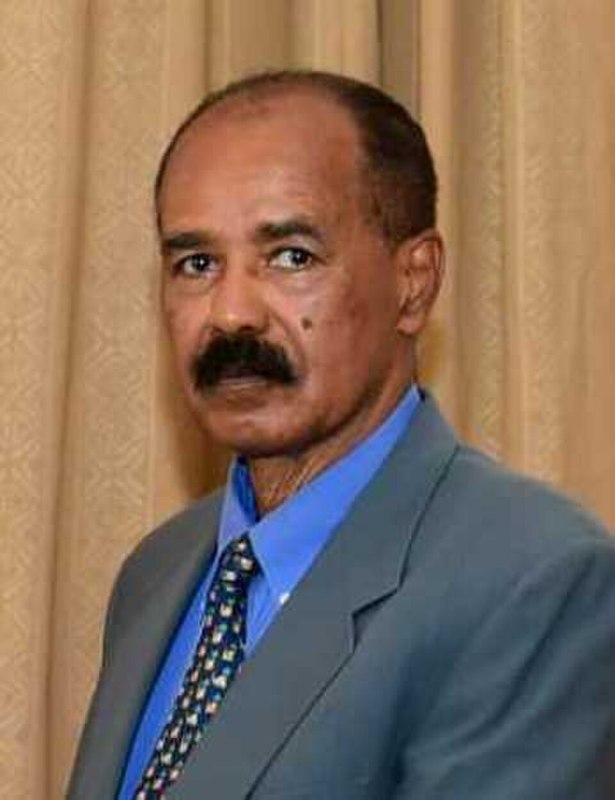
Isaias Afwerki at a glance
How long has Afwerki been in power?
Isaias Afwerki led the Eritrean People's Liberation Front to victory in a decades-long independence war and became president when Eritrea formally separated from Ethiopia in 1993.
A constitution ratified in 1997 was never implemented, and no national elections have been held in Eritrea's history as an independent state, leaving Afwerki as its only president.
Isaias Afwerki's political timeline
EPLF forces led by Afwerki defeat Ethiopian government forces.
Eritrea formally gains independence and Afwerki becomes president.
A national constitution is approved but never brought into force.
A border war with Ethiopia kills tens of thousands and hardens internal repression.
Senior officials calling for democratic reform are arrested and never seen publicly again.
Afwerki signs a peace agreement ending two decades of hostility with Ethiopia.
How did Isaias Afwerki come to power?
Afwerki led the Eritrean People's Liberation Front during Eritrea's thirty-year armed struggle for independence from Ethiopia, which succeeded in 1991.
He became president when independence was formalised in 1993 and has remained the country's only head of state since.
How has Isaias Afwerki maintained power?
Afwerki's government has never implemented the 1997 constitution or held elections, ruling instead through the single legal party and an indefinite national service system critics describe as forced labour.
Independent media has been banned since 2001, and Eritrea consistently ranks at or near the bottom of global press freedom indexes.
Viewed alongside other leaders Dictator Dashboard tracks in Africa, such as Ismail Omar Guelleh in Djibouti and Paul Kagame in Rwanda, Isaias Afwerki's reliance on concentrated executive power and restricted political competition reflects a wider regional pattern.
Key mechanisms of political control
- Constitution ratified but never implemented
- No national elections since independence
- Indefinite compulsory national service
- Ban on independent and private media
- Detention of dissidents without trial or public account
Isaias Afwerki's Strongman Index
The Strongman Index measures the concentration and durability of political power around an individual leader. The score is based on the methodology used by Dictator Dashboard.
Is Isaias Afwerki a dictator?
Eritrea under Afwerki is routinely ranked as one of the least free countries on earth, with human rights organisations comparing its national service system to forced labour.
Dictator Dashboard uses its own inclusion methodology rather than relying on a single external classification. This distinction is important because terms such as "dictator", "autocrat" and "authoritarian leader" are used differently across political research.
Sources & methodology
Dictator Dashboard combines publicly available political, electoral and historical information. Individual claims should be supported by the relevant primary or authoritative source.