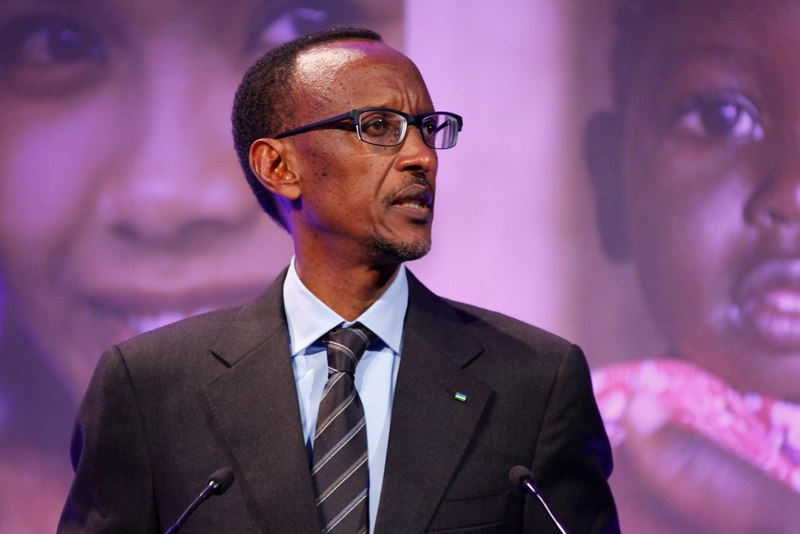
Paul Kagame at a glance
How long has Kagame been in power?
Paul Kagame led the Rwandan Patriotic Front that ended the 1994 genocide, serving as de facto leader and vice president before formally becoming president in 2000.
A 2015 constitutional referendum reset term limits and could allow Kagame to remain in power until 2034, extending his rule to four decades.
Paul Kagame's political timeline
Kagame's RPF forces stop the Rwandan genocide, in which an estimated 800,000 people were killed.
Kagame serves as vice president and defence minister while wielding dominant power.
Kagame is elected president by parliament.
Kagame wins Rwanda's first post-genocide direct presidential election.
A referendum allows Kagame to potentially remain in office until 2034.
Kagame wins another term amid an absence of genuine opposition candidates.
How did Paul Kagame come to power?
Kagame commanded the Rwandan Patriotic Front, the rebel force that ended the 1994 genocide and took control of the country.
He served as the de facto power behind a transitional government before formally assuming the presidency in 2000.
How has Paul Kagame maintained power?
Kagame's government has been credited with significant economic development and reduced corruption, but human rights organisations have documented the harassment, imprisonment and killing of opposition figures and journalists, including abroad.
Genuine electoral competition has been effectively eliminated, with prominent opposition figures barred from running or facing prosecution.
Viewed alongside other leaders Dictator Dashboard tracks in Africa, such as Yoweri Museveni in Uganda and Ismail Omar Guelleh in Djibouti, Kagame's reliance on concentrated executive power and restricted political competition reflects a wider regional pattern.
Key mechanisms of political control
- Reset of constitutional term limits
- Exclusion or prosecution of opposition candidates
- Restrictions on independent media and civil society
- Alleged targeting of dissidents living abroad
- Tight security-service control of political life
Paul Kagame's elections
| Year | Election / event | Outcome |
|---|---|---|
| 2003 | Presidential election | Won |
| 2010 | Presidential election | Won |
| 2017 | Presidential election | Won |
| 2024 | Presidential election | Won |
Election figures and classifications should be linked to the underlying sources used by Dictator Dashboard.
Paul Kagame's Strongman Index
The Strongman Index measures the concentration and durability of political power around an individual leader. The score is based on the methodology used by Dictator Dashboard.
Is Paul Kagame a dictator?
Kagame is widely praised internationally for Rwanda's post-genocide reconstruction, but researchers classify his government as authoritarian given the near-total absence of political competition.
Dictator Dashboard uses its own inclusion methodology rather than relying on a single external classification. This distinction is important because terms such as "dictator", "autocrat" and "authoritarian leader" are used differently across political research.
Sources & methodology
Dictator Dashboard combines publicly available political, electoral and historical information. Individual claims should be supported by the relevant primary or authoritative source.