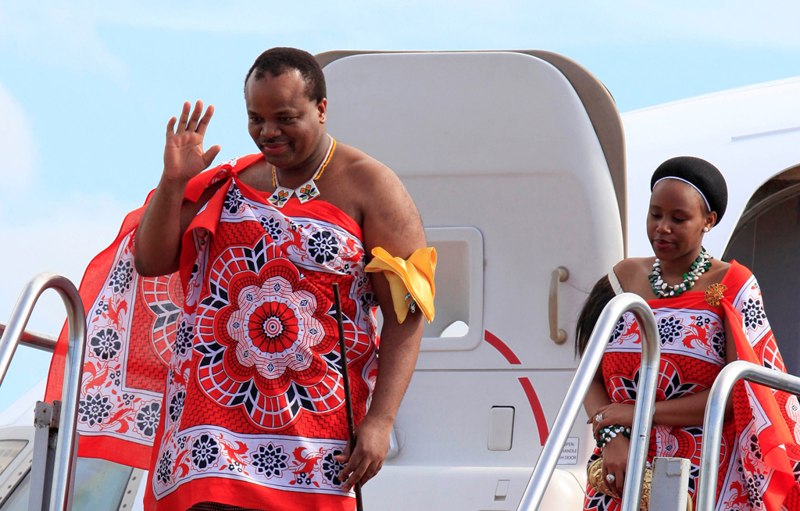
King Mswati III at a glance
How long has Mswati III been in power?
Mswati III was crowned King of Swaziland (renamed Eswatini in 2018) in April 1986 at the age of 18, succeeding his father, King Sobhuza II, and has ruled with near-total authority ever since.
Political parties have been banned from contesting elections since 1973, a restriction Mswati's government has maintained, with candidates for parliament standing as individuals under royal oversight.
King Mswati III's political timeline
Mswati III is crowned king of Swaziland at age 18.
Parliamentary elections are held without political parties, a format that continues today.
A constitution is adopted that formally preserves the king's supreme authority.
Mswati renames the country from Swaziland to Eswatini.
Mass protests demanding democratic reform are met with a lethal security crackdown.
Prominent pro-democracy figures are killed amid a broader crackdown on dissent.
How did King Mswati III come to power?
Mswati III ascended to the throne in 1986 following the death of his father, King Sobhuza II, becoming one of the world's youngest reigning monarchs at the time.
He inherited a political system that had already banned political parties in 1973 and has preserved that structure throughout his reign.
How has King Mswati III maintained power?
The king appoints the prime minister, senior judges and a portion of parliament directly, and retains the final word on all legislation, leaving little genuine separation of powers.
Pro-democracy protests in 2021 and subsequent years were met with lethal force, and prominent activists have been killed or driven into exile.
Viewed alongside other leaders Dictator Dashboard tracks in Africa, such as Yoweri Museveni in Uganda and Ismail Omar Guelleh in Djibouti, Mswati III's reliance on concentrated executive power and restricted political competition reflects a wider regional pattern.
Key mechanisms of political control
- Ban on political parties contesting elections
- Royal appointment of the prime minister and judges
- Direct royal control over legislation
- Lethal suppression of pro-democracy protests
- State ownership stakes controlled by the royal family
King Mswati III's Strongman Index
The Strongman Index measures the concentration and durability of political power around an individual leader. The score is based on the methodology used by Dictator Dashboard.
Is King Mswati III a dictator?
Eswatini under Mswati III is consistently classified as one of the least politically free states in the world, given the complete absence of party politics and concentrated royal authority.
Dictator Dashboard uses its own inclusion methodology rather than relying on a single external classification. This distinction is important because terms such as "dictator", "autocrat" and "authoritarian leader" are used differently across political research.
Sources & methodology
Dictator Dashboard combines publicly available political, electoral and historical information. Individual claims should be supported by the relevant primary or authoritative source.